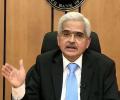
The Reserve Bank of India on Wednesday decided to keep the policy rate unchanged for the tenth time in a row but changed its stance to 'neutral' that may lead to a cut in the forthcoming policies. RBI maintained status quo despite the US Federal Reserve lowering the benchmark rates by 50 basis points last month.
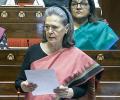
Congress Parliamentary Party chairperson Sonia Gandhi has criticized the Waqf (Amendment) Bill, calling it a 'brazen assault' on the Constitution and part of the BJP's strategy to keep society in a 'permanent state of polarization.' She also spoke out against the One Nation, One Election Bill, calling it a 'subversion of the Constitution.' Gandhi further accused the Modi government of ignoring the women's reservation bill and other demands for reservation, and of 'dragging the country into an abyss' where the Constitution will only exist on paper. She also criticized the government for limiting the speaking time of the Leader of the Opposition in Parliament and for not allowing discussions on important issues like the working of the defense and external affairs ministries and the challenges posed by China on the border.

This was Rana's last legal chance not to be extradited to India. Earlier, he lost a legal battle in several federal courts, including the US Court of Appeals for the North Circuit in San Francisco.

The Enforcement Directorate (ED) conducted raids on the premises of Rajasthan Congress leader and former minister Pratap Singh Khachariyawas and Punjab AAP MLA Kulwant Singh as part of a money laundering probe linked to the Rs 48,000-crore PACL Ponzi scam. Khachariyawas, who served as a minister in the Ashok Gehlot government, claimed the ED action was politically motivated due to his criticism of the government. Singh, a real estate promoter, is reported to be Punjab's richest MLA with assets worth Rs 1,000 crore. The ED has been investigating the PACL scam since 2015, alleging that the company defrauded investors of Rs 48,000 crore through fraudulent investment schemes.

The Reserve Bank is likely to maintain status-quo on the key interest rates for the third time in a row in its upcoming bi-monthly policy review despite the US Federal Reserve and the European Central Bank hiking benchmark rates, as domestic inflation is within the RBI's comfort zone, say experts. The borrowing cost which started rising in May last year has stabilised with RBI keeping the repo rate unchanged at 6.5 per cent since February when it was raised from 6.25 per cent. In the previous two bi-monthly policy reviews in April and June the benchmark rate was retained.

Inflows into gold exchange-traded funds (ETFs), which manage a total of Rs 37,390 crore, have surged sharply in recent months. This trend is likely to continue, especially after the reintroduction of long-term capital gains tax (LTCG), which is likely to attract smart money into mutual fund offerings amid a robust outlook for the yellow metal. Smart money, also known as opportunistic flows, refers to strategic investments that are generally of a short-term horizon.

Domestic macroeconomic data announcements, global trends and trading activity of foreign investors would guide market sentiments this week, analysts said. After a record rally, markets may face volatile trends this week amid elevated valuations and investors would also keep a track of global oil benchmark Brent crude and rupee-dollar movement for further cues. "Potential volatility in the stock market is anticipated this week. Elevated valuations remain a concern, with investors now focusing on monsoon progress and its impact on the rural economy.

'A possible post-election growth momentum may be lost.'

When evaluating bonds, returns shouldn't be the sole factor. Pay close attention to the bond's credit rating. It should ideally be AA or higher.

Tahawwur Rana, a Canadian citizen and native of Pakistan, was extradited to India to face charges related to his alleged role in the 2008 Mumbai terror attacks. The US Department of Justice said Rana allegedly commended the LeT terrorists who carried out the attacks and suggested they should be awarded Pakistan's highest gallantry award. Rana is accused of facilitating a fraudulent cover for his childhood friend, David Headley, to conduct surveillance in Mumbai for the Lashkar-e-Taiba (LeT) terrorist group. He is also accused of helping Headley submit false visa applications to Indian authorities. This extradition follows a lengthy legal process that began in 2020 with India's request for Rana's surrender. Rana, who was previously convicted in the US for providing material support to LeT, will now face trial in India on 10 criminal charges related to the Mumbai attacks.

The US Federal Reserve on Wednesday (local time) raised interest rates by 75 basis points (bps) or three-quarters of a percentage point in the boldest move since 1994.

The three day MPC meeting began on Monday and the decision will be announced on Wednesday by RBI Governor Shaktikanta Das.

'Our growth in banking, financial services, and insurance (BFSI) is a prime example.'

'Future market gains will likely depend primarily on earnings growth.'

Noting that these three Cs haunt Indian education today, the Congress Parliamentary Party chairperson said in an article that this "carnage" of India's public education system must end.
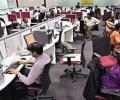
Management commentary on demand environment, and forward guidance will be in focus when Indian IT services players declare their September quarter results for financial year 2024-25 (Q2FY25). The industry is exepected to have continued on the path of recovery in Q2, similar to the preceding quarter, rather than sprint towards growth. The top four firms likely grew between 0 per cent and 4 per cent year-on-year (Y-o-Y), according to consensus estimates.

Announcement of macroeconmic data such as industrial production and inflation, the US Federal Reserve's interest rate decision along with trends in global equities would dictate movement in the stock market this week, analysts said. Besides, foreign fund trading activity would also guide the trends in equities. "All eyes are now on the US Fed policy outcome for cues, which is scheduled on June 14. In the following sessions, the European Central Bank (ECB) and Bank of Japan (BoJ) will also announce their policy decisions.

'GenAI programmes may not be large in terms of value, but have triggered a lot of new opportunities among clients.'

Foreign Portfolio Investors (FPIs) have pumped Rs 47,148 crore in the Indian equities in June, making it the highest inflow in 10 months, enthused by the country's steadily improving macroeconomic fundamentals. However, inflows in July may be subdued as FPIs might adopt cautious stance due to the recent comments from the US Federal Reserve, Mayank Mehraa, Smallcase manager and principal partner at financial consultancy Craving Alpha, said. Besides, VK Vijayakumar, Chief Investment Strategist at Geojit Financial Services, said FPIs are likely to turn a bit cautious going forward as valuations in the country are rich from a short-term perspective.

Among the Sensex firms, IndusInd Bank, Tata Steel, Tata Motors, Sun Pharma, Infosys, Mahindra & Mahindra, Infosys, NTPC, Bharti Airtel, HCL Technologies and Axis Bank were the biggest gainers. Tech Mahindra and Bajaj Finance were the laggards.

The central government is expected to complete the auction of the 5.9-million tonne (mt) lithium reserves discovered in the Reasi district of the northern Union Territory (UT) of Jammu & Kashmir (J&K) by the end of this calendar year, Union Mines Secretary Vivek Bharadwaj said on the sidelines of the launch of the Federation of Indian Chambers of Commerce and Industry (Ficci) report on 'New-Age Energy Minerals' on Tuesday. "Auction will be over by the end of this year," said Bharadwaj, adding, "We have already recommended a transaction advisor to the J&K government for the auction of lithium reserves." However, the exact timeline for an auction will be decided by J&K authorities, Union mines minister Pralhad Joshi said in Parliament last month.

Indian government bonds, particularly those of shorter maturity, strengthened sharply on Monday, as the collapse of the California-based Silicon Valley Bank (SVB) prompted investors to rush to the safety of American debt, leading to a decline in US bond yields.

Stock markets will be driven by domestic inflation data, ongoing quarterly earnings from corporates and global trends this week, analysts said. News flows around the general election would also be tracked by investors, market experts said.

'Geopolitics will be the most important driver of financial markets in 2025.'
Indian stock markets are expected to be driven mostly by global factors this week amid a lack of local triggers and earnings season largely coming to an end, say analysts. Crude oil prices, rupee movement and US Federal Reserve meeting minutes to be released this week will also influence the market sentiment. "With the earnings season behind us, global cues would largely dictate the trend in the coming week," Ajit Mishra, SVP - technical research, Religare Broking Ltd, said.
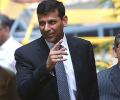
With 7 per cent economic growth, India is not creating enough jobs as reflected by the number of applicants for vacant posts in some states, Reserve Bank's former governor Raghuram Rajan said and suggested the government needs to focus on promoting labour-intensive industries to generate employment. Rajan further said some Indians, especially those at upper level, are comfortable and have high incomes, but consumption growth from the lower half of the country has still not recovered to pre-pandemic level.

The RBI is fully aware that the high-cost loans and high indebtedness of the borrowers could pose financial stability risks, if not addressed by these NBFCs. Governor Shaktikanta Das has issued a stern warning, saying the RBI is closely monitoring these areas and will not hesitate to take appropriate action, if necessary, if the culprits don't opt for self-correction. Watch out for some action, soon, notes Tamal Bandyopadhyay.

Federer may have set the benchmark on how to do tennis retirements. He didn't go out in a blaze of lonely glory but in the warmth of friendships formed over the years, observes Deepti Patwardhan.

Of the eight RBI governors who have held office since the 1991 economic liberalisation, Bimal Jalan had the longest stint and S Venkitaramanan, the shortest. Current Governor Shaktikanta Das will overtake Bimal Jalan before completing his second term in December, points out Tamal Bandyopadhyay.

Despite its admirable competence and proven track record, the RBI doesn't have the capacity to supervise an economy that's growing so fast and becoming larger by the year, points out T C A Srinivasa Raghavan.

World champion D Gukesh will take on Fabiano Caruana of the United States in the two-game quarter-final after the latter picked the Indian in a unique format typical of Freestyle Chess Grand Slam, in Hamburg, Germany.

In the Sensex pack, 20 stocks ended in the red while 37 of the Nifty constituents closed the session with losses. NTPC was the biggest loser among the Sensex constituents, ending with a loss of 2.71 per cent.

To minimise risk, invest in a debt fund whose duration matches your investment timeframe.

Given the possibilities that next year's assembly elections could throw up, Stalin told the state assembly that an interim report had to be submitted by January 2026. The outcomes may well find its way into the DMK's poll manifesto, thus seeking to keep the electoral focus still on the BJP-ruled Centre and Prime Minister Modi, observes N Sathiya Moorthy.

In more than one way, it's a setback for the DMK and Chief Minister Stalin in political terms. The electoral fall-out, if any, will have to wait until the next summer, only when assembly elections are due in the state, explains N Sathiya Moorthy.
In a drastic measure to stem any major disruption to the US economy as a result of the coronavirus outbreak, the Federal Reserve has cut its benchmark interest rate to almost zero and said it would buy USD700 billion in bonds. The covid-19 pandemic has sickened more than 156,000 people worldwide and left more than 5,800 dead. The death toll in the US stands at 68, while infections neared 3,700.

International Monetary Fund (IMF) Deputy Managing Director (MD) Gita Gopinath has condemned the "terrible and disturbing" incident of rape and murder of a trainee doctor in Kolkata. "Personally, it is terrible to have any event of this kind. It is disturbing," she told Business Standard in New Delhi.

US's terrible political and economic leadership will ultimately cost the dollar its value. India must act early to avoid being dragged down, suggests R Jagannathan.

Tahawwur Hussain Rana, a key accused in the 26/11 Mumbai terror attacks, was brought to India on Thursday after being "successfully extradited " from the US, the National Investigation Agency (NIA) said. The 64-year-old Canadian citizen of Pakistani origin landed in Delhi in a special plane on Thursday evening, ending days of speculation of when and how he will be extradited, officials said. The NIA said in a statement that it had secured the successful extradition after years of sustained and concerted efforts to bring to justice the key conspirator behind the 2008 mayhem that claimed 166 lives. Rana is accused of conspiring with David Coleman Headley alias Daood Gilani, and operatives of designated terrorist organisations Lashkar-e-Taiba (LeT) and Harkat-ul-Jihadi Islami (HUJI) along with other Pakistan-based co-conspirators, to carry out the the three-day terror siege of India's financial capital.

Equity benchmark Sensex surged past the 57,000-mark by rallying over 1,000 points on Thursday, tracking an overall bullish trend in global equities despite the US Federal Reserve hiking rates. The 30-share BSE index closed 1,047.28 points or 1.84 per cent higher at 57,863.93. Likewise, the NSE Nifty surged 311.70 points or 1.84 per cent to end at 17,287.05.
